AP Spanish exam preparation with a native teacher
1on1Spanish gives you private Spanish lessons with qualified native teachers, online across the United States. The AP Spanish exam is written and scored by the College Board — we are not affiliated with it, and what we do is prepare students for the parts that are hardest to practice at school.
In a class of thirty, a student speaks for a couple of minutes. The exam asks them to speak alone, to a recorder, with no second take.
Take your free level test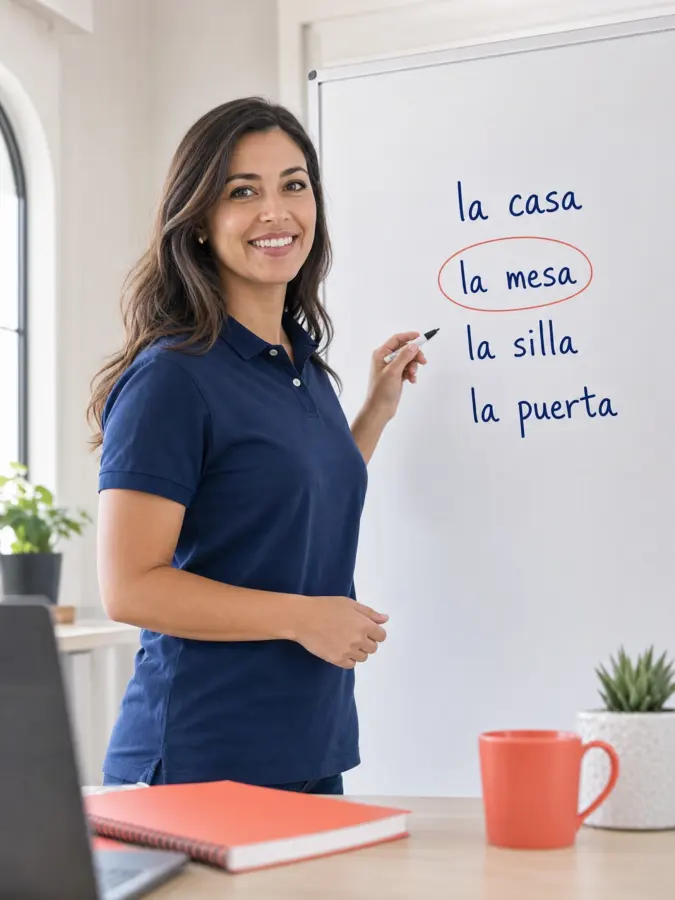
What the AP Spanish exam is, and what a score is worth
AP Spanish is a College Board exam taken by high school students in the United States, scored from 1 to 5. A strong score can earn college credit or advanced placement, which is the reason most families care about it.
What it is worth is decided by each college, not by the College Board and certainly not by us. Two universities can treat the same score very differently, so the number to check is the policy of the schools your student is applying to.
There are two separate exams, and they are not interchangeable. Language and Culture is the one most students take; Literature and Culture is a different exam with a different job.
The two AP Spanish exams, and which one a student is sitting
Check the exam name on the school schedule before buying a single practice book. They test different things.
-
Language and Culture
The communication exam. Multiple choice on reading and listening, then free response: written tasks and spoken tasks, all of it in Spanish and all of it built around real-world material rather than a set text.
-
Literature and Culture
The analysis exam. It works from a required reading list of texts in Spanish and asks the student to analyze them — themes, context, technique — and to argue a case, in writing and out loud.
The spoken tasks are where preparation at home usually stops
The free-response section asks the student to speak, alone, into a recording, with a short preparation window and no chance to start over. One task is a simulated conversation where they answer prompts in turn; another asks them to speak for a couple of minutes comparing something in their own community with the Spanish-speaking world.
That is a strange thing to do well the first time. It is not conversation and it is not a presentation: it is a timed performance with a specific shape, and the shape can be trained.
So that is what the lessons do. Your teacher runs the tasks at exam speed, keeps time, and then plays back what actually came out — the hesitations, the English word that slipped in, the answer that was correct but forty seconds short.
How AP Spanish preparation works here
This runs alongside school, not instead of it. The teacher at school sets the content; we work on delivery.
- Start with the free level test A teacher hears where the student actually is in Spanish, which is often several steps away from the grade on the report card, and says so plainly.
- Confirm which exam is on the schedule Language and Culture and Literature and Culture need different preparation. Getting this wrong wastes months.
- Drill the task types until the format disappears When the student stops thinking about what comes next, all their attention is free for the Spanish. That is most of the improvement right there.
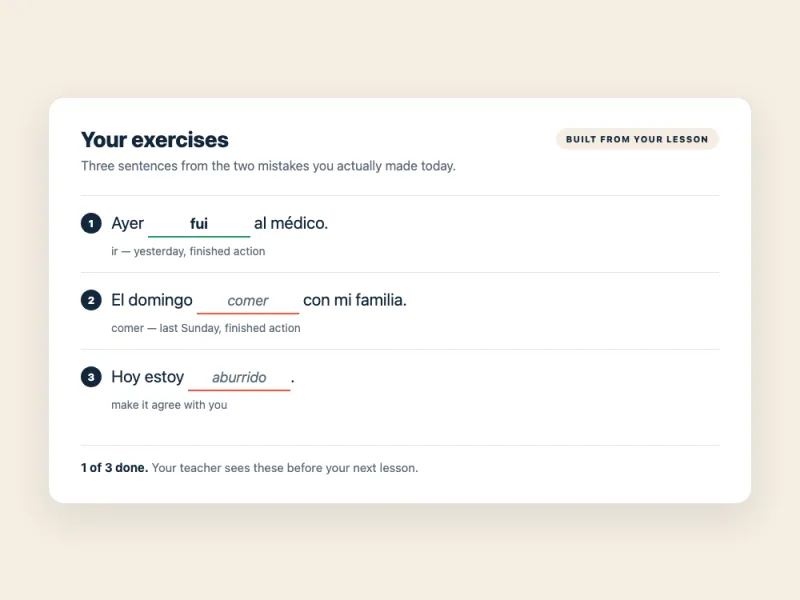
- Speak every lesson, and get told the truth Timed spoken tasks with a native teacher, corrected out loud, then a written report and exercises built from that day's mistakes.
- Register through the school Exam registration, dates and fees go through the school and the College Board. We are not part of that and never handle it.
A heritage speaker is not automatically ready for AP Spanish
Students who grew up hearing Spanish at home often walk into the exam expecting it to be easy, and the speaking sections usually are. What catches them is written register and the specific shape of the tasks: an argument built from three sources, or an email answered in formal Spanish.
It is a small gap and it closes fast, but only if somebody names it first. That is the most common thing our teachers find in a level test with these students.
If the goal is college credit rather than the high school exam, compare it with the other Spanish proficiency tests before committing to a date.
The exam is in May; the Spanish is for longer than that. Plenty of students keep the slot through the summer, because underneath the AP preparation this is the ordinary way to learn Spanish with 1on1Spanish.
What AP Spanish preparation costs
Plans run from $84 a month for one lesson a week up to $264 a month for four. Every plan is one-on-one, 25 minutes, with a qualified native teacher. Book any teacher, any available slot. No weekly caps.
The same monthly plans as everyone else, with no exam surcharge and no minimum term. Lessons are short and booked around school, sports and everything else in a teenager's week.
Every plan includes unlimited AI practice with our conversation partner, for the days between lessons.
Your first month is $1 — on any plan.
Questions families ask about the AP Spanish exam
What is the difference between AP Spanish Language and AP Spanish Literature?
Language and Culture tests communication: reading, listening, writing and speaking about real-world material. Literature and Culture works from a required reading list of texts in Spanish and asks for analysis and argument. Most students take Language and Culture. Check which one is on the school schedule before starting any preparation, because they need different work.
Does a good AP Spanish score give college credit?
It can, but each college sets its own policy, and the same score can mean credit at one school and placement at another. The College Board scores the exam from 1 to 5; what that number is worth is decided by the university. Check the policy of the schools on your student's list rather than assuming.
My student takes AP Spanish at school. Why add private lessons?
Because of the speaking. In a class of thirty, an individual student speaks for a couple of minutes a lesson, and the exam asks them to talk alone, on the clock, into a recorder. One-on-one lessons are twenty-five minutes where the student does almost all of the talking and gets corrected on the spot.
When should we start preparing for the AP Spanish exam?
Earlier than most people do, because the spoken tasks improve with repetition spread over months rather than a heavy few weeks. A student starting in the fall can build the habit of speaking Spanish out loud every week, which is exactly what the exam rewards. Starting in the spring still helps, but the work is narrower.
Do you write the exam or register students for it?
No. The AP Spanish exam is written and scored by the College Board, and registration happens through the student's school. We are not affiliated with the College Board and we do not handle any part of the registration. We prepare students for the exam, and nothing on this page should be read as a guarantee of a score.
Find out where your student's Spanish actually is
A short conversation with a qualified native teacher, online, no card. They will say what the exam is likely to expose and what is realistic before the date.
Take your free level test