Spanish for law enforcement and emergency services
1on1Spanish gives you private Spanish lessons with qualified native teachers, online across the United States. Lessons built around the contacts you make on a shift: clear instructions, calm questions, and taking information down correctly.
Most of the Spanish this job needs is a short list, said clearly, under pressure.
Take your free level test
The first thirty seconds decide most of it
A contact that starts with two people not understanding each other gets louder, and volume is not a translation strategy. The person in front of you is reading your tone long before they parse your words, and so are you.
What helps in those thirty seconds is a small number of sentences said correctly and without hesitation: who you are, what you need them to do, and that you are going to explain what is happening.
That is a narrow, repeatable skill. It is also exactly the kind of thing that improves fast with a teacher and barely at all with an app.
Three situations these lessons are built around
Chosen because they are the ones officers and dispatchers bring us, not because they read well.
-
Giving an instruction
Short, unambiguous, and in the right form. Spanish has more than one way to tell someone to do something, and the wrong one sounds either confusing or contemptuous. Getting this right lowers the temperature of a contact.
-
Bringing it down
Asking what happened and letting the answer run. De-escalation in a second language depends less on vocabulary than on being able to listen at speed without your face saying you are lost.
-
Getting the details
Names, addresses, times, plates, descriptions. Numbers and spelling in Spanish are where accurate information most often goes wrong, and they drill well.
Law enforcement Spanish phrases, said the way they should be said
A sample of the everyday phrasing lessons work on, in Latin American Spanish. Practicing these is a starting point, not a qualification, and none of it belongs in a formal interview.
| Español | English |
|---|---|
| Soy oficial de policía. ¿Habla usted inglés? | I am a police officer. Do you speak English? |
| Necesito que se calme y me escuche. | I need you to calm down and listen to me. |
| Ponga las manos donde yo pueda verlas. | Put your hands where I can see them. |
| ¿Hay alguien más adentro de la casa? | Is there anyone else inside the house? |
| ¿Alguien está herido? | Is anyone hurt? |
| Voy a explicarle lo que está pasando. | I am going to explain what is happening. |
| Dígame su nombre completo, por favor. | Tell me your full name, please. |
| ¿Me puede deletrear su apellido? | Can you spell your last name for me? |
| Usted no está detenido. | You are not under arrest. |
| Vamos a llamar a un intérprete certificado. | We are going to call a certified interpreter. |
The last line is on the list deliberately. Knowing when to hand the conversation over is part of the job, not a failure of it.
What these lessons are not
They are not official training, they carry no certification, and they do not qualify anybody to work in Spanish. We are a language school. We do not accredit anything, and no department policy should be written on the assumption that we do.
They also do not replace a certified interpreter. Advisements of rights, formal statements, custodial interviews and anything that will be read in a courtroom go through whatever your agency requires, no matter how good your Spanish gets. Any provider suggesting otherwise is selling you a liability.
What lessons change is the ordinary ground either side of that: the first contact, the instruction, the question, the reassurance, and a clearer sense of where your Spanish stops.
Lessons that survive rotating shifts
A 25-minute lesson fits before a shift or after one, and the length is the point. Anything longer is the first thing to go when the schedule turns over, and a plan you drop in week three teaches nobody anything.
You book the slots you want and move them when the rota moves. Teachers are available early, late and across time zones, and plans are monthly with no contract and no minimum term.
Everything runs in a browser, like the rest of our online Spanish classes. Between lessons every plan includes unlimited AI practice, which is where the repetition belongs: the same instruction said thirty times until it comes out without a pause.
Officers who stay past the first few months usually stop working only from the duty vocabulary. When that happens the lessons widen out, because underneath this is the same one-on-one method anyone uses to learn Spanish online with us.
Who your teacher is
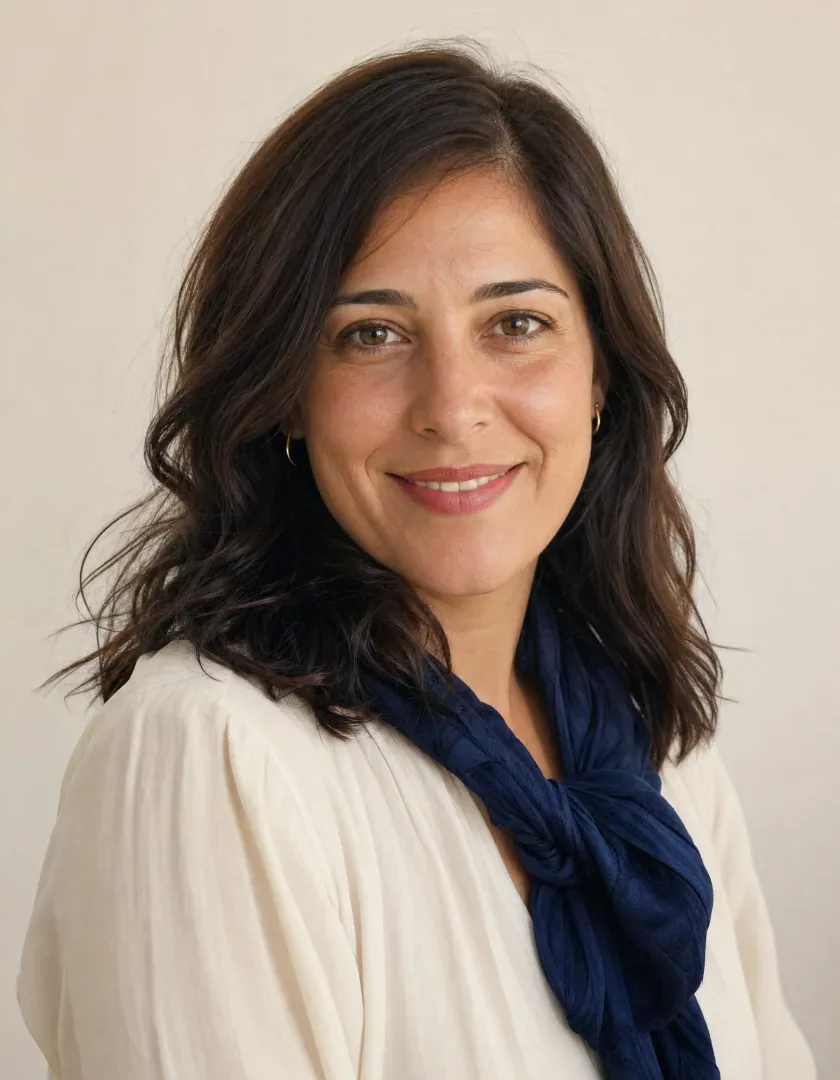
Native speakers from Spain and across Latin America, all of them trained to teach rather than only to speak. In this context that matters more than usual: a trained teacher will tell you that your instruction sounded harsh, or that your question was grammatically fine and impossible to answer quickly.
They are language professionals, not former officers, and they will not pretend otherwise. You bring the operational judgment; they supply the Spanish and an honest read on how you sound in it.
You can see how we choose our Spanish teachers before booking anything.
What these lessons cost
Plans run from $84 a month for one lesson a week up to $264 a month for four. Every plan is one-on-one, 25 minutes, with a qualified native teacher. Book any teacher, any available slot. No weekly caps.
Same teachers and same monthly plans as everyone else. There is no departmental rate and no minimum term; the invoice shows the plan and the month, which is usually what a reimbursement or professional development process needs.
Every plan includes unlimited AI practice with our conversation partner, for the days between lessons.
Your first month is $1 — on any plan.
Questions officers and dispatchers ask before they start
Is this an official law enforcement Spanish certification?
No. We are a language school with qualified native teachers, and we do not accredit anyone or issue credentials of any kind. If your agency requires a formal qualification, it has to come from an accrediting body. What we provide is instruction and practice, and we describe it that way deliberately.
Can I use this instead of calling an interpreter?
No. Advisements of rights, formal statements and anything that will be read in court go through a certified interpreter regardless of your Spanish. Lessons change the ordinary contact either side of that: the instruction, the question, the reassurance, and knowing precisely when to stop and call.
How much Spanish do I need for a routine contact?
Less than most people assume, but it has to be automatic. A short set of instructions and questions, said without hesitation and understood when the answer comes back fast, covers a large share of routine contacts. Automatic is the hard part, and it comes from speaking, not reading.
Which variety of Spanish will I learn?
Latin American Spanish by default, because that is what most Spanish speakers in the United States grew up with. Our teachers come from across Latin America and from Spain. If your jurisdiction has a strong population from one country, mention it in the level test and we match where the schedule allows.
I work rotating shifts. Can I keep this up?
That is what the format is built for. Twenty-five minutes fits either side of a shift, teachers are available early, late and across time zones, and you move your bookings when the rota moves. Plans are monthly with no contract, so a bad month costs you a month.
Find out where your Spanish actually is
A short conversation with a qualified teacher, online, no card. Tell them what your shift looks like and which contacts go wrong, and they will tell you what is realistic and where to start.
Take your free level test