
Food and drink in Spanish: meals, dishes and mealtimes
Food vocabulary is easy to memorize and hard to use well, because the words alone don’t tell you that lunch in much of Latin America happens closer to 2pm than noon, or that cena can mean a light meal, not a full dinner. This page covers the everyday words for meals, common dishes and drinks, and — just as importantly — the schedule those words attach to, so a sentence like nos vemos para la cena means what you think it means. At 1on1Spanish a qualified native teacher gives you real vocabulary and real timing in every 25-minute one-on-one lesson.
Reviewed by María Jiménez — Licenciada en Filología Hispánica (BA in Hispanic Philology) · Updated Sep 2026
The three meals, and when they actually happen
El desayuno (breakfast) is similar to English timing, generally morning. El almuerzo (also called la comida in Mexico and much of Central America) is the midday meal, and it’s often the largest of the day — typically eaten later than lunch in the US, commonly between 1 and 3pm. La cena (dinner) tends to be lighter and later than American dinner, often after 8pm and sometimes closer to 9 or 10 in Spain. This shift matters in conversation: an invitation para cenar a las nueve is completely normal, not unusually late.
Everyday food
El pan is bread, el arroz rice, la carne meat, el pollo chicken, el pescado fish, el huevo egg, el queso cheese, la sopa soup, la ensalada salad. El postre is dessert. Common dishes vary widely by country, but a few words travel: la tortilla means a flatbread in Mexico and an egg-and-potato dish in Spain — genuinely different foods with the same name, worth knowing before you order. Produce gets its own pages, because that’s where the country-by-country names pile up: Spanish fruit names and vegetables in Spanish both flag which word your teacher is likely to use.
Drinks
El agua (water — note it’s feminine despite taking el for pronunciation reasons: el agua fría, but las aguas frías in plural). El jugo is juice (el zumo in Spain). El café coffee, el té tea, la leche milk, el refresco or la soda for a soft drink, la cerveza beer, el vino wine. Tomar is the verb used for drinking: tomo café por la mañana, not bebo café — both are correct, but tomar is far more common in everyday speech across Latin America. Tomar is fully regular, and the tomar conjugation covers its other jobs too, from tomar el metro to tomar una decisión.
Quick reference
| Spanish | English | Note |
|---|---|---|
| el desayuno | breakfast | — |
| el almuerzo / la comida | lunch | la comida in Mexico/Central America |
| la cena | dinner | typically later and lighter than US dinner |
| el pan | bread | — |
| el arroz | rice | — |
| la carne | meat | — |
| el pollo | chicken | — |
| el pescado | fish | — |
| el huevo | egg | — |
| el queso | cheese | — |
| la sopa | soup | — |
| el postre | dessert | — |
| el agua | water | feminine noun, uses el for pronunciation |
| el jugo | juice | el zumo (Spain) |
| el café | coffee | — |
| la cerveza | beer | — |
| el vino | wine | — |
Where timing and words both cause confusion
The words themselves are usually straightforward; the risk is assuming a US schedule or a US meaning behind a familiar-looking word.
| Word or habit | The risk |
|---|---|
| almuerzo / comida | In Mexico, comida usually means the midday meal specifically, not “food” in general, even though comida also literally translates as “food.” Context makes it clear which sense is meant |
| cena at 9pm | Arriving for dinner at 6 or 7pm in much of Latin America or Spain can mean the kitchen isn’t ready yet — dinner reservations and invitations commonly start later than in the US |
| tortilla | A flatbread in Mexico, an egg-and-potato dish in Spain — the same word for two genuinely different foods, so context or country matters |
| beber vs. tomar | Both mean “to drink,” but tomar dominates everyday speech; beber can sound slightly more formal or literary in casual conversation |
Common mistakes English speakers make
Cena often starts later than American dinner — sometimes considerably later, especially in Spain.
In Mexico, ¿ya comiste? usually means “have you had lunch?”, not a general question about eating.
Tortilla española is the egg-and-potato dish; tortilla de maíz is closer to the Mexican flatbread, if that’s what you actually want.
Beber isn’t wrong, but tomar sounds far more natural in casual, spoken Spanish.
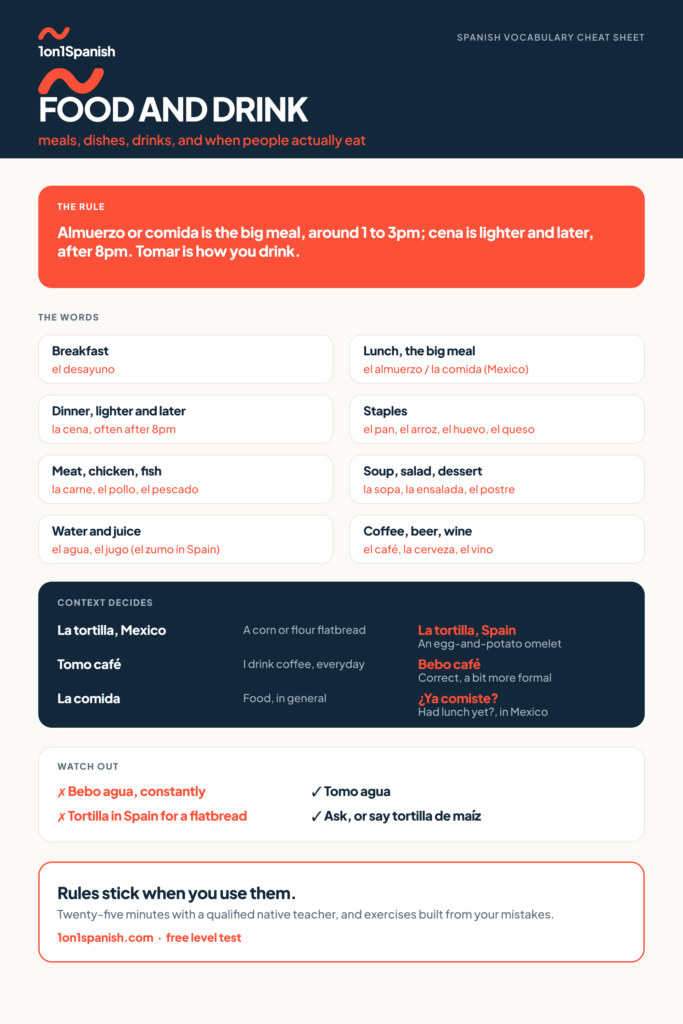
Take the chart with you
The chart is free to view and share. Drop your email and we’ll send the print-ready US Letter PDF — the version you stick on the fridge.
Practice
Practice food and drink vocabulary with a real teacher
Charts get you halfway. The other half is saying it out loud to someone who corrects you on the spot. At 1on1Spanish you get 25-minute private lessons with a qualified native teacher, exercises built from the mistakes you make in class, and AI practice between lessons.
First month $1. No contracts, cancel anytime.
Want a teacher listening while you practice? Learn Spanish online with us, one lesson at a time.
Take your free level testBuilt on RingTeacher's method — 700,000+ classes delivered since 2017, teaching English to Spanish speakers. Now in the other direction.
Frequently asked questions
What time is dinner in Spanish-speaking countries?
Later than in the US, in general. Cena commonly starts around 8 or 9pm in much of Latin America and can run even later in Spain, where 10pm dinners aren’t unusual. If you’re invited to cenar, it’s worth confirming the exact time rather than assuming a 6 or 7pm start.
Is “almuerzo” or “comida” correct for lunch?
Both are correct. Almuerzo is understood everywhere and is the more neutral choice; comida is what’s commonly used in Mexico and much of Central America specifically for the midday meal, even though the same word literally means “food” in general. Context almost always makes the meaning clear.
Why does “el agua” use “el” if water is a feminine word?
Spanish uses el before feminine nouns that start with a stressed “a” sound, purely for pronunciation — saying la agua creates an awkward run of vowel sounds. The word stays grammatically feminine, which is why the plural switches back: las aguas, not los aguas.
What’s the difference between “tortilla” in Mexico and Spain?
In Mexico, tortilla is a thin flatbread made of corn or flour, used for tacos and similar dishes. In Spain, tortilla (specifically tortilla española) is a thick omelet made with eggs and potatoes. They’re genuinely different foods sharing one name, so it’s worth specifying if you’re not sure which one you’ll get.
Should I say “tomo” or “bebo” for “I drink” in Spanish?
Tomar is the far more common choice in everyday spoken Spanish across Latin America: tomo café, tomo agua. Beber is correct and understood everywhere, but it can sound a bit more formal or literary in casual conversation, similar to choosing “consume” over “drink” in English.